Medical Innovations to look forward to in 2018

Blogger.valens@gmail.com

2017 has seen its share of medical breakthroughs and pioneering research work. Its evident that the future of healthcare is going to change dramatically with medical and dental technology. With some ready to go and other still in development, these medical innovations, advances are certain to have a dramatic impact on health care.
Here are some of the medical breakthroughs just over the horizon that could have a profound impact on your life. 


1. Centralized Monitoring of Hospital Patients-

Reports indicate that up to 45% of inpatient cardiac arrest are not detected appropriately. This is due to hospitals having “alarm fatigue” when busy caregivers become desensitized to the constant noise emanating from cardiac telemetry monitoring systems. “Centralized monitoring has emerged as the answer, as part of a "mission control" operation in which off-site personnel uses advanced equipment, including sensors and high-definition cameras to monitor blood pressure, heart rate, respiration and more. Complex data are assimilated to trigger on-site intervention when appropriate while filtering out unimportant alarms.”, says Dr. Faulkner, Ohio State University Hospital.

2. Enhanced Recovery After Surgery-

The concept of “fast track” or “enhanced” recovery after the surgery has been under development since past few years. As for decades the common procedure before any surgery was to not eat before surgery, using pain medications, staying in bed during recovery. To substantial growth in medical technology, innovators are overhauling post- surgery strategies, and delivering imposing results. The ERAS (Enhanced Recovery After Surgery) procedure permits the patient to eat before surgery, limits opioids by prescribing alternative medicines and encourages regular walking which reduces compilation rates and speed recovery.

3. The Emergence of Distance Health-

Bringing the healthcare environment to the patient's home has been a dream goal for scientist and doctors for decades. It will help the patient as well as the doctor as it will remove the “traveling barriers” which will result in the optimal outcome as well as significant cost saving. Hospitals are getting ready for a widespread adoption of the technology in 2018 due to an increase in connectivity through mobile technology and consumer demand. The patients will be equipped with attachable devices that record and report medical information to doctor to monitor their condition. Over 19 million patients are projected to use these remote monitoring devices in 2018.

4. Neuromodulation to Treat Obstructive Sleep Apnea-

Sleep apnea is the most common sleep disturbance which can leads to high blood pressure, heart disease and stroke. While continuous positive airway pressure device, (C.P.A.P.) is the gold standard treatment, it is estimated that more than 40% of sleep apnea patients refuse to wear the device. Innovators have found out a way to help such people. The device acts like a pacemaker which helps to synchronize the intake of air with the action of the tongue and is controlled by a remote or a wearable patch. These neuromodulation systems have had positive results in clinical testing and are to be gifted to the world this year.

5. Laser Dentistry-

Medical experts use lasers, which are focused light beam at one point, to remove or alter tissues of a small amount. It will help the patient to enjoy the dental experience as the dentist won't need a drill or administer anesthesia. Dentists use lasers for a variety of procedures involving the inside of the mouth, be it to remove overgrown tissue, to whiten teeth, or to reshape the gums. Also, lasers can reduce symptoms and healing times associated with traditional therapies; reduce the number of bacteria in both diseased gum tissue and in tooth cavities, and control bleeding during surgery.

Top 10 most useful apps for medical students you didn’t know about

Blogger.valens@gmail.com


Getting through a medical college may be one of the most amazing, if not, challenging trials a student might face in their lifetime. The good news? You don’t have to do it alone. We’re not even talking about the lifelong friends you’ll make along the way, but instead about the abundance of 21st-century tools at your disposal.
Topping the list? Apps. Let’s count down 10 picks aimed at helping you make the most out of medical school.
MedCal X: Available in 5 languages with more on the way, MedCalX can be customized with one’s favorite equations. Medical students are ready to go with the information they need when time-sensitive situations arise. This app will help them do their job better. This medical calculator puts access to complex medical formulas, scores, scales and classifications literally at your fingertips.

Eponyms:
There are more than 8,000 medical eponyms named after the people (or places or things) associated with the identification of the disease. Needless to say, keeping track of these eponyms can be a chore. This free app lets users browse and search thousands of common medical eponyms!
Daily Rounds: This new kind of digital journal puts the latest clinical cases from medical schools around the world in your back pocket. Daily Rounds’ case-based, problem-solving approach, gives medical students a first-hand look at new, relevant and well-curated clinical scenarios for a unique and ongoing learning process.
Medscape: This is a highly-rated app and used by healthcare professionals all over the world. Its features include medical news; drug information and tools; clinical presentations, workups and treatment information; and even continuing medical education courses. Don’t have access to the internet at the moment? One can also take advantage of this app offline.

Epocrates: This leading medical reference app is trusted by healthcare providers to support decisions, save time, and delivers patient-focused care in an instant thanks to everything from drug interaction, checks to in-depth etc. Considering that time is one of a med student’s most valuable assets, feedback from users indicating that Epocrates saves at least 20 minutes a day is reason enough to download this app.
Brainscape: Medical school students study a lot. But what if there was a way you could easily increase your active recall and cognition? There is, and it’s called spaced repetition. This app, which bills itself as “flashcards on steroids,” harnesses the power of this scientifically-proven retention technique to help students learn more easily and efficiently.
Pepid: What can you do with app? Quickly and easily navigate clinical and drug content, take and share notes with classmates and colleagues, find critical drug interactions, and improve your differential diagnosis capabilities - all at once.
Drugs Dictionary: A pocket dictionary for drugs with a friendly interface. It stores all information about drugs; their uses, how to take, side effects, precautions, drug interactions, missed dose, storage.
Diseases Dictionary Medical: An offline free medical dictionary app containing medical disorders & diseases with detailed definitions, symptoms, causes and treatment information. It is a handbook that acts as as a clinical adviser for self diagnosis and can also be used to look up symptoms, diseases and treatment.
Prognosis: Your Diagnosis: An app with an engaging series of clinical case scenarios which assess the decision making skills of the player. Each one is accompanied by comprehensive and concise discussion of the diagnostic reasoning involved and key lessons applicable to day to day practice. Your Diagnosis is also useful practice material for medical students and other healthcare professionals facing their academic and professional licensure exams.

From juggling copious amounts of information to keeping up with the very best practices in patient care, today’s med students have a lot to learn. And while medical school may not be easy, these 10 apps not only make the experience more manageable, but can also help you become a better student and future doctors in the process.

Can Circadian Rhythm Prevent Cancer?

Blogger.valens@gmail.com
If you’ve ever noticed that you tend to feel energized and drowsy around the same times every day, you have your circadian rhythm to thank.

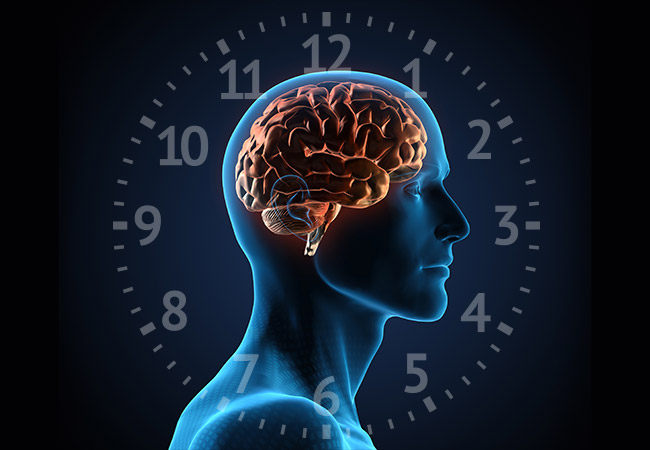
Our blog for October has already talked about Circadian Rhythm. It is basically a 24-hour internal clock that is running in the background of your brain and cycles between sleepiness and alertness at regular intervals. It's also known as your sleep/wake cycle.

Circadian genes are very important in our body tissues. Disruption of circadian rhythms is associated with various forms of cancer in humans. There is increasing evidence that links, proper function of the clockwork, with the prevention in the development of cancer, in our body.

The master circadian clock in our body is a timekeeping system and controls multiple clocks in other peripheral tissues of the body. Many studies have shown that proper regulation of circadian clock gene is implicated in the prevention of cancer and other diseases.
Disruption of circadian rhythms accelerates tumor progression, and potentially restoring circadian rhythms, improve the health of the body. The circadian clock runs in sync with environmental light-dark cycles and helps to adapt metabolic and behavioural patterns such as daily cycles of rest and activity.

As far as skin cancer is concerned, the main cause is DNA damage induced by the UV rays from sunlight. A mechanism called nucleotide excision repair is able to fix some of this damage at the cellular level and prevent it from developing into cancer.

The speculation:
A research conducted by Gaddameedhi in mouse models, has found that the circadian clock regulates the repair system’s activity. In his experiment, he irradiated mice with UV rays three times a week for 25 weeks. One group was irradiated at 4 a.m., the other group at 4 p.m. The morning group was five times more likely to develop tumors than the afternoon group.

The ostensible conclusion:
The findings suggest that people may be more at risk of developing cancer if they are exposed to UV rays in the afternoon rather than morning.

His research is now extending into whether the circadian clock also determines the best times to receive chemotherapy treatments for cancer.

Your circadian rhythm works best when you have regular sleep habits, like going to bed at night and waking up in the morning around the same times from day to day (including weekends). When things get in the way, like jet lag, daylight savings time, or a compelling sporting event on TV that keeps you up into the wee hours of the morning, you can disrupt your circadian rhythm, which makes you feel out of sorts and can make it harder to pay attention.

Do you know about Yomi: The Dental Robot?

SMBT Group of Institutions
Ever imagined a human machine extracting that painful tooth from your gums?
Ever thought a robot would be dispensing anesthetics in the soft tissues inside your mouth?
Well, if you have imagined that, it is no longer just an imagination!

Yomi can surely do it!
Yomi, is the first robot assisted guidance system, with planning software for dental surgery. It’s software is used to plan a procedure based on a patient’s CT scan. During the procedure, the system continuously tracks the patient and controls the direction of the drill as the clinician advances it into tissue.

This technology was invented by Wuhan University Stomatological Hospital and Beihang University’s Robotics Institute.


A woman in China, became the first person on whom Yomi conducted a dental surgery solely by itself. With the use of preprogrammed directions, it implanted two teeth into the patient's mouth, in the presence of human doctors. The patient was measured using a CT scan and the robot was programmed with the specific movements it needed to perform during the surgery like, measuring angles and depth for the new teeth.

It was a one hour procedure with the surgery handled exclusively by Yomi- The Dental Robot.
It enables dentists to receive real-time physical and visual guidance throughout the surgery. This provides accuracy and reliability without the need to produce a custom plastic guide or worry about performing an unguided freehand approach.
The surgeon is in control of the robotic arm, but the device guides the dentist as per the plan laid out and can adjust for patient movement. This implies that it can design dental procedures based on a patient’s CT scans.
The robot also helps in providing feedback — in other words, the surgeon knows by touch and feel through sensory feedback provided by it where in the mouth the drill is moving. For example, a bone will feel different than softer tissue.

In the world of medical robotics, every sector is trying hard to challenge its supremacy and trying to expand their overall robotic applications. Yomi is an improvement over the plastic guides that surgeons tend to use during minimally-invasive dental implant surgery. It is considered to be the prime and most important revolution in dental technology till date.

SMBT is always looking forward to contribute to its students knowledge about tech, preferably medical. We uplift and motivate our students to research on new ideas and subject matter in order to enhance their creativity and interest in the field. Because, who knows, the next big medical invention may be one from our college!

Here’s all you need to know about Circadian Rhythm

blogger.valens@gmail.com


Here’s all you need to know about Circadian Rhythm


In 2017, the Nobel Prize in Medicine was awarded to Jeffrey C. Hall of the University of Maine, Michael Rosbash of Brandeis University and Michael W. Young of Rockefeller University "for their discoveries of molecular mechanisms controlling the circadian rhythm". They successfully peeked inside the human biological clock and elucidate its inner working. Their discovery explained how plants, animals, and humans adapt their biological rhythm so that it is synchronized with earth’s revolution.

So what exactly is a Circadian Rhythm? And how does it affect our body and what is its importance? We shall discuss that here.

Circadian Rhythm is also known as your sleep/wake cycle. Circadian Rhythm is a roughly 24-hour cycle in the psychological processes of living beings. There are times when you tend to feel that you are energized and drowsy at the same time every day, you have your circadian rhythm to thank to. They determine the sleeping and feeding patterns of all living beings. For most adults, the biggest dip in energy happens in the middle of the night and just after lunchtime. Those times can be different if you’re naturally a night owl or a morning person. You also won’t feel the dips and rises of your circadian rhythm as strongly if you’re all caught up on sleep. It’s when you’re sleep-deprived that you’ll notice bigger swings of sleepiness and alertness.


Researchers began studying biological rhythms more than 50 years ago. Studies conducted on fruit flies by Colin Pittendrigh and on humans by Jurgen Aschoff are considered to be the foundation of the beginning of modern research. But the studies of biological rhythms dates way back to 1700s, when a French scientist- Jean-Jacques d'Ortous de Mairan, conducted experiments and published a monograph describing the daily leaf movement of a plant. De Marian observed that the daily raising and lowering of leaves continued even when the plant was placed inside a closed room with no exposure to sunlight. This study suggested that the movements of the plant represented something more than a simple response to sunlight and were controlled by an internal clock. The term circadian was coined by Franz Halberg in the 1950s.

Learning more about the genes which are responsible for the circadian rhythm of a human body will help us to understand biological systems and the human psychology. Cognizing on what makes biological rhythm tick may lead to treatments for mental disorders, jet lags, sleep disorders, obesity and other health problems. It can also be helpful to improve ways of individuals to adjust their routine to a night shift jobs.

The researchers hope that these initial findings will be a basis for further investigation. Now that CLOCK has been identified as a molecule of interest, it will help to focus future investigations into the molecular mechanisms. There is still much to learn about CLOCK and its role in human psychology, but now that scientists know the genes involved in it, research can begin chipping away at the details.

Study at SMBT College, Nashik

blogger.valens@gmail.com

SMBT Educational Trust was founded in the year 1984. The aim was to provide free education to children of economically deprived class of the tribal society. Afterwards, a multi-specialty charitable hospital was started with the sole aim of providing help to rural people in need of medical care. Over a period of time, the Trust further expanded its charitable activities in the rural area by starting various educational institutions.

Studying at SMBT is the ideal choice and has been over the years because along with receiving education, students here receive a lot of opportunities personal growth. SMBT is the home to a diversity of students coming from different walks of life. The hostel life and the campus life is such as to facilitate to cater to students’ every need: academic as well as others.

The Best Hostel Life:
At SMBT, there are separate hostels for girls and boys. The goal is to make available good living conditions for students along with neat environment and nutritious food. There are multiple hostel rooms to accommodate all students comfortably. The mess is a spacious hall and is equipped with all necessary cooking equipments to provide students the best food. We believe the hostel life is of utmost importance for every student as they spend most of their time here. We, at SMBT, are constantly trying to make our students’ hostel life experience better by providing the best of everything.

The Best Campus Life:

SMBT has one of the most impressive college campuses. The infrastructure and environment is such that every student and member of faculty is glad to be a part of SMBT. SMBT Institute has a grand building which is designed after taking into consideration all norms laid down by the various government authorities and councils. The following facilities are available in the college building. Dean Office: Administrative Block
Lecture Theatre with Audio-Visual Aids: Staff Room
Central Library: Common Labs
Departmental Labs: Boys/Girls Common Rooms
College Council Room: Departmental Laboratories
Examination Department: Department Staff Rooms
Record Room: Playground

ANATOMY

Demonstration Room, Dissection Hall, Histology Lab,Departmental Library, Museum, Staff Room

PHYSIOLOGY
Demonstration Room, Clinical Lab, Hematology Lab,Departmental Library, Amphibian Lab, Mammalian Lab, Staff Room

BIOCHEMISTRY

Demonstration Room,Departmental Library, Staff Room

PHARMACOLOGY
Demonstration Rooms, Practical Lab, Museum, Departmental Library, Research Lab, Staff Room

PATHOLOGY
Demonstration Rooms, Histopathology Lab, Departmental Library, Research Lab, Staff Room

MICROBIOLOGY
Demonstration Rooms, Practical Lab, Departmental Library, Museum, Research Lab, Staff Room

OTHER FACILITIES

Xerox Facility, Internet Facility, Banking Facility with ATM, Canteen Facility, Hostel Facility, Laundry Facility

The Innovative Life:

Like we mentioned before, SMBT facilitates personal growth of students along with academic enhancement. In addition to academic knowledge, we offer our students a lot of opportunities to ensure that they become more creative and innovative. By embracing creativity, we have helped our students refine their skills by thinking of innovative solutions to academic problems.

The infrastructure and the opportunities given to students at SMBT is what have made it one of the best colleges to study in. For more information, visit smbt.edu.in