Showing posts with label #DentalCollegesInMaharashtra. Show all posts

The Suicide Stigma

SMBT Group of Institutions

There is a lot of conversation around the concept of suicide in our society. The overall institution of mental health is not openly talked about in many regions of India. One may say that the prolonged ignorance of deterioration mental health could result in suicide. This Suicide Prevention Awareness Month, SMBT takes a closer look into the status of suicide in India.

“But he was so happy, why did he do it?”

“She was always the life of the party. Makes you wonder why she would make this decision.”

“He had everything, why would he kill himself?”

The most common question that people have is, “why?” The simplest answer to this question is the popular saying, “Everything is not what it seems.” One can never be sure about what really goes on in someone else’s mind. But of course, there are reasons that are more explanatory. This blog is meant to focus solely on abolishing the stigma around mental health, but to achieve that we must first understand the institution of mental health and answer the ‘why’ question, scientifically.

In the medical field, suicide is linked with depression. In our society, symptoms of depression are often mistaken for laziness or disinterest in things. In theory, these are real symptoms, but they are not excuses for one’s incompetence. Patients suffering from depression are physically unable to bring hope, happiness or basic interest in their lives. There is an extensive amount of research being conducted about the physical tell-all signs of the illness. The most common diagnosis of depression is a chemical imbalance in the brain, but there seems to be a lot more to it. Studies show a difference in brain structure, glitches in the functioning of neurotransmitters and more. This helps us better understand how mental illnesses can physically affect its victim. Mental illnesses are not always triggered by external life events, they can also, like many physical illnesses, be hereditary.

From the information above, we can successfully answer the ‘why’ surrounding suicide. An individual’s financial or family status does not determine what is going on in their mind and their brain activity. y We can also understand that suicide isn’t a conscious choice or as most say, ‘the easy way out’. Mental illnesses that are left untreated for a long period of time drive their victims to take such harsh measures. It is often said that they aren’t looking to end their life, they’re just looking to end the pain within them. The impact depression has on the brain causes physical pain to the patient’s body. A kind of pain that painkillers are often not enough to numb. This is where patients develop habits of substance and drug abuse.

Now that we fully understand why someone would resort to something as severe as suicide to get away from their mental illness, leaving behind their seemingly well to do lives and families, let us look at a few demograpic statistics in India to better understand what leads individuals to take this decision in the Indian society. 800,000 people succumb to suicide worldwide, yearly. Out of which 17%, i.e. 135,000 are Indian residents. The top five reasons for suicide are marriage-related issues. Research shows that there are twice as many male suicide cases than that of females. In fact, until two years ago, suicide was considered a criminal offence! What do we understand from these statistics? There seems to be a hidden conversation about the ideology of toxic masculinity. Men in Indian societies are not allowed to be expressive about their feelings and emotions. Any emotion that isn’t stable or a composed demeanour is considered a sign of weakness. This prohibits men and to an extent many women in India to openly communicate their mental health issues, in fear of being shamed by their families and peers. This promotes prolonged untreated mental illnesses that lead to extreme measures of taking one’s own life.

The most important takeaways from this blog are that firstly, mental illnesses are not excuses to be lazy or lethargic and must be treated like one would with any physical ailment. Suicide can be defined as the result of prolonged, untreated mental illness. Our society has a long way to go with accepting the expression of human emotion regardless of the age, gender, occupation, or any other factors. The stigma around suicide can only be eliminated when we, as a society, abolish the stereotype of voicing feelings being a sign of weakness. Once we allow open conversation about mental health without judgement, individuals who may be going through something will have the confidence to talk about it and ask for help, before it’s too late.


For more informative blogs, stay in tune with SMBT Group of institutions at www.smbt.edu.in!

The Abuse of Blood Donor Dogs

Blogger.valens@gmail.com

Why do we need blood donors?: Blood Transfusion
Individuals donate blood that is stored in banks and used when an individual requires a transfusion. Blood transfusion is needed in cases where the patient suffers from severe blood loss, severe infection, liver disease, anemia, and more.

Donor Dogs & their Abuse
Just like humans, dogs also require blood transfusions in certain surgeries or medical conditions, creating the need for donor dogs that can provide canine blood. The procedure of collecting blood from donor dogs is painless and quick. The dog is made comfortable and blood is taken from its jugular vein in a matter of 15 to 30 minutes. The dog is given enough reassurance throughout and treats for positive reinforcement in the end.


But what happens when selling canine blood is turned into exploitative business practice?
Greyhounds are universal blood donors as their blood is compatible with all breeds. There are canine blood “banks” that breed greyhounds and sell their blood to hospitals. Hemopet is rumored to be such a book bank, located in California, USA. They house around 200 greyhounds, most of which are retired racing dogs. Racing dogs are usually euthanized after their career. The organization started as a way to save these canines from being euthanized and providing universal blood to other canines at the same time.

But there have been serious allegations against their care for their dogs. There have been rumors of them mistreating canines by constricting them to small cages for 23 hours at a stretch. Other allegations include drawing blood from unhealthy dogs suffering from anemia, infections and incurable diseases such as lupus. The deprivation of normal life and emotional neglect of these dogs cause them immense distress and are the cause for frequent fights between canines that leave wounds. There are allegations that the staff of Hemopet does not take the right measures to prevent these fights and leave the inflicted wounds untreated, causing infections.

Hemopet has denied these allegations and continue to vouch for their dogs being treated well and kept in safe, habitable and caring environments. But the public is not convinced.

What can you do to help?
First and foremost, we can do our bit by spreading awareness about this case.
SMBT has also gathered a list of petitions you can sign to put a stop to the cruel acts of Hemopet.
For more informative blogs, visit www.smbt.com

NIPAH VIRUS: WHY IS IT SO DEADLY?

Blogger.valens@gmail.com

The state of Kerala is in a state of daze and panic as it faces the outbreak of Nipah virus in some of its districts again. And even though the state government has been quick to respond, there is still time for us to breathe a sigh of relief as it has not been contained completely.  So what is this virus exactly and why is it considered to be so dangerous?

What is Nipah virus?


Named after Kampung Sungai Nipah, the place at which it was said to be originated in Malaysia, 1998, Nipah virus is a zoonotic disease (a disease that is transmitted from animals to humans) that is naturally hosted by fruit bats. Fruit bats are considered as a reservoir of diseases as they carry 60 different types of viruses and also cause diseases like Ebola and Zika. Since fruit bats can only be found in warm regions, the outbreak of Nipah is largely restricted to such places like Malaysia, Bangladesh, and India.

How is Nipah virus transmitted?
Nipah Virus can be transmitted to humans via direct contact or via the transmission of body fluids.


Source: Practo


As the chart shows, one can get infected by the Nipah virus by being in direct contact with the bats, eating fruits bitten by bats affected by the same or by eating the animals who have consumed such fruits. It can also spread by being in direct contact with a person infected by the virus.

What are the symptoms of Nipah virus?
NiV can spread inside the human body without any significant symptoms until a period of two weeks. However, some might display symptoms similar to that of influenza (commonly called flu).

Why is Nipah virus this deadly?
NiV is considered to be deadly for two main reasons-
The virus has the ability to develop into fatal encephalitis, which is a condition that can cause inflammation and swelling of the brain. Also, there is no such cure to NiV. No treatment can completely cure one suffering from Nipah virus and the current treatments only involve supportive care.

For more such informative blogs, keep following us!

HOW TECHNOLOGY IS AFFECTING OUR PHYSICAL HEALTH

Blogger.valens@gmail.com
Technology has slowly made space for itself in everybody's lives. With eighty-seven percent of millennials stating that their smartphone never leaves their side, 80% of them checking their smartphone first thing in the morning and 88% using the camera on their smartphone weekly, we can determine the extent to which we have become dependent on technology.


While this technology can very conveniently help us learn about new things, it can also affect our physical and mental health. And since we are always in the contact of technology in some form or the other, it is imperative to check on how it is affecting us physically in various ways.

Sedentary lifestyle
While technology is meant to add to our efficiency, it also encourages a sedentary lifestyle. A study proves that there is a direct connection between prolonged sitting and life longevity. Hence, if you are a person who works the whole day in front of your computer or laptop and then goes back home to watching TV or using mobile phones for entertainment, SMBT Group of Institutes suggests you some kind of movement to ensure that you live a healthy and long life.

Sleep disorders
Prolonged exposure to screens and the subsequent emission of blue light reduces the levels of melatonin, a hormone that promotes sleep and allows for increased alertness the following morning. As a result, the number of cases of people having troubled sleep is increasing. A research conducted in 2015 states that 93% of Indians are sleep deprived for various reasons. The anxiety behind not receiving a call or a text, or using phones till late at night is adding to this percentile. SMBT Group of Institutes suggests proper sleep hygiene, including limiting the use of light-emitting devices or smartphones close to bedtime.

Vision issues
70% of adults have experienced some symptoms of eyestrain from digital device usage, including using small cell phone screens to watch videos and movies. Prolonged exposure to screens can cause dry eyes, light sensitivity, double vision, fatigue, and headaches. SMBT Group of Institutes advices the 20-20-20 rule to counter this problem. When working with screens, take a 20 second break every 20 minutes and look 20 feet away. Using screens at appropriate distances and using cool gray color as the backdrop can also help.


Muscle strain
Using phones, computers or laptops for longer periods of time can create a strain in our neck and back. Constant scrolling or playing games using thumbs can cause a condition called ‘text thumb’. The arms, elbows and fingers too get strained when too much time is spent holding a cellphone to the ear, resting elbows on a desk, or keeping arms bent in an acute angle. SMBT Group of Institutes recommends using both the hands to reduce appendage and change in the position of arms.

While not much can be done about the nature of the jobs we do or the ever increasing link between the real and virtual world, a lot can be done on creating a balance between the two. See to that you limit your time on the screens and make sure that you provide your body with some kind of movement everyday. We hope that these facts and tips help you in some way. Here’s wishing you a healthy screen time!

For more such blogs, keep following us!


AN INSIGHT INTO THE SMBT WORLD

Blogger.valens@gmail.com
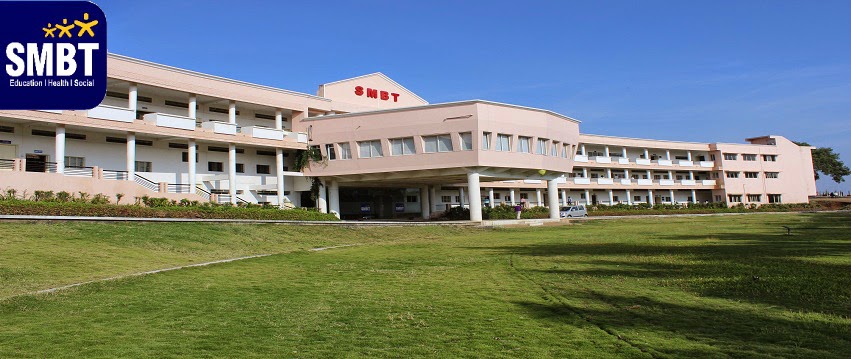
SMBT’s campus in Dhamangaon, Nashik is a world full of amenities and world-class facilities. Since we believe in providing our students with the best, we have a campus that has it all. Adding to a thousand reasons why you should be joining SMBT Group of Institutions, is the campus life and facilities that we provide to our students-

Image result for smbt group of institutes

The campus consists of SMBT’s Medical College, Dental College, Ayurveda College, Nursing College, Institute of D.Pharmacy, SMBT Hospital and Ayurveda Hospital. The campus also has a Dental Boys hostel, Dental Girls Hostel, MBBS Boys Hostel, MBBS Girls Hostel, Ayurveda Boys Hostel, Ayurveda Girls Hostel and Staff Quarters.

More than 1000 students stay at our Nashik campus and we are always working towards providing them with a safe environment to live in. Which is why our campus has security stations and personnel at every corner of the campus.

Our campus also has a marketplace from where the students can buy the items that they need. A special place is also allocated to Laundry. Facilities like ATM are also provided inside the campus itself. Students can also have their bits fun at the huge SMBT Stadium, gardens and Indoor Game Club. 

We want to make sure that the students at SMBT are always healthy and hence, have provided them with various canteen options that serve them with taste and health. We have also designed a Health Club for the students where various health benefiting activities are conducted.

Also, many other amenities like washrooms, service stations and parking zones are present throughout the campus. Parents who visit their children can enjoy the benefits of the dormitory and have a pleasant stay at the campus. The campus also has a temple and an auditorium.

All these facilities make SMBT’s Nashik campus a very pleasant and home-like stay. The students living here never feel short of anything and are always seen smiling with content.


Have you enrolled yourself at SMBT yet? Visit www.smbt.edu to know more about us!

SMBT HOSPITAL- NORTH MAHARASHTRA’S LARGEST CHARITABLE HOSPITAL

Blogger.valens@gmail.com


SMBT Group of Institutes is one of the top medical colleges in northern Maharashtra, providing a range of degree courses such as Medical and Research, Dental, Pharmacy and Ayurveda. From the very beginning, SMBT aimed at providing quality medical education and healthcare for the underprivileged sections of the society.


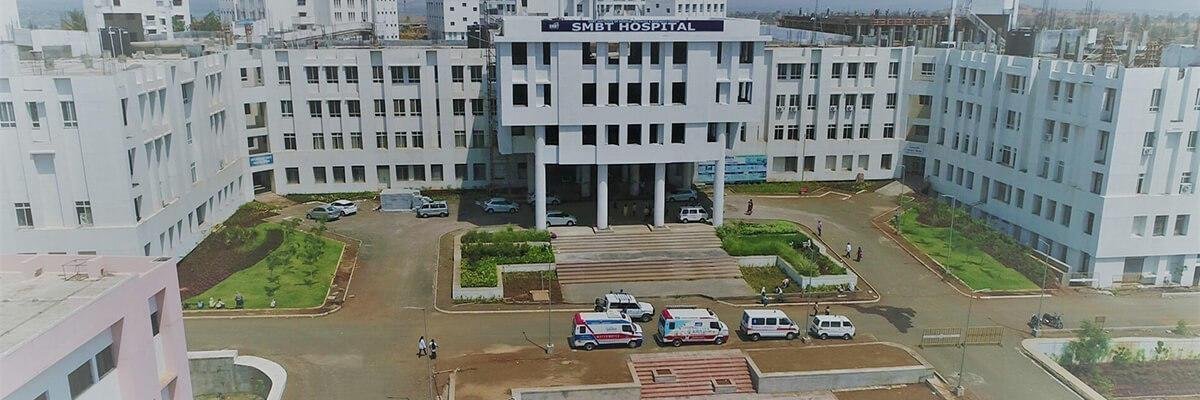
Which is why, in 2012, SMBT opened its very own charitable hospital and clinic, which is now the largest in North Maharashtra. SMBT Hospital, SMBT Heart Institute, Ayurved Hospital, Dental Hospitals and Amrutvahini Hospitals are all a part of this unmatched healthcare services that SMBT provides.

SMBT Group of Hospitals provide healthcare services at remote areas of North Maharashtra where most of the population is unaware of the advancement in medical sector. All the treatments are available at affordable rates keeping in mind the socio-economic condition of the patients in the region. 

We provide -

  • 24x7 services that are free of cost
  • Quality treatments with a dedicated and experienced team of doctors
  • 100 bedded ICU
  • 13 Modular Operation Theatres
  • Free blood bank
  • Cath lab
  • Dialysis unit
  • Emergency trauma care
  • Central pharmacy
  • Cardiac ambulances
  • Cafeteria
  • Dormitory for relatives
With all these world-class facilities and a team of doctors that is continuously working hard to provide good healthcare for the people who had been completely overlooked for years, SMBT is constantly improving and growing. We are glad to be contributing to the society in our little ways and aim to work hard towards adding more to it. 

SMBT: A HOME AWAY FROM HOME

Blogger.valens@gmail.com
SMBT has been continuously striving towards making itself better. With its ever-increasing number of schools, institutions, hospitals, and research centres, SMBT is proud to have more than 2200 students that receive only the best quality medical education.


SMBT tries to give its students the best possible environment to live in, which is why we make sure that we make our students feel like home. With the facilities that are provided to our students to the activities and events that are held for them, SMBT is a home away from home-

  • SMBT offers more than 750 spacious rooms for the students who opt for living in hostels. 
  • There are 1020 students staying at the Nashik campus and 700 at the Sangamner campus. 
  • Students at SMBT get the best quality food. 
  • Sports competitions and facilities to create a healthier atmosphere. 
  • SMBT FEST is held every year to encourage the students to pursue their extra-curricular talents and skills. 
  • Students themselves arrange the cultural and sports events with great enthusiasm. 
  • Every student is provided with the opportunity to be intellectually curious, thoughtful and reflective. 

For the facilities that we provide, the quality of education we give, the atmosphere we try to create and the joy we try to bring to every student of ours, SMBT is proud to call itself ‘a home away from home’.


SMBT: A Student-friendly and academics-worthy campus.

SMBT Group of Institutions


It is a known fact that having good infrastructure and a healthy learning environment in educational institutes is decisive for students to achieve the expected academic results. In other words, the campus and infrastructure directly impact the performance of the students.

The fact is that a good infrastructure, with renewed spaces, makes it possible for youths that live in remote areas to study and, in addition, tends to improve the attendance and interest of students and teachers in learning. For this same reason, investments in college infrastructure have an essential role in solving access problems of students to the college system and to improve their performance.

SMBT group of institutes provides a healthy and positive environment that facilitates learning.

SMBT Educational trust was founded in the year 1984, with an aim to provide free education to children of economically deprived class of the tribal society. Later, a multi-specialty charitable hospital was started with the sole aim of providing help to the rural people in need of medical care.

The educational institutes under SMBT trust include:

  1. SMBT Institute of Medical Sciences and Research.
  2. SMBT Dental College & Hospital.
  3. SMBT Ayurveda College & Hospital.
  4. SMBT College of Pharmacy (B Pharm & M Pharm).
  5. SMBT Institute of Pharmacy (D Pharm).
  6. Jai Hind Tribal School. 

All the above institutes have modern and spacious building to accommodate all the classes, library and laboratory within the institute campus. A separate multipurpose building complex is provided to cater to extra-curricular needs of the students.

Library

The institute has an excellent collection of technical books including textbooks, reference books, competitive examination books and handbooks.

Laboratories

The institute has fully established laboratories as per norms of the SPPU and AICTE.

IT Resource Center

We have full fledged computers and peripherals laboratory with high end PCs and with good internet speed.

Sports Facilities

The institute has adequate facilities for indoor as well as outdoor games.

Hostels

Hostel facilities are well defined with separate hostels for girls and boys. All necessary amenities such as food, cleaning, entertainment are taken care of.

Transport

Three buses have been provided for conveyance of students from various parts of Nashik City to campus and back.

Canteen

Keeping in mind the nutritional requirements of students, canteen facilities have been made available in the campus. Adequate care is taken to ensure maintenance of hygiene standards.

Properly planned infrastructure is an out-and-out key factor in effective teaching and learning experience. It also plays as a simulator for increased student attendance and staff motivation.

MEDICAL MYSTERIES

Blogger.valens@gmail.com
 
Medical Industry has developed and advanced in past 50 years. New treatments, various type of modern equipment, vaccines are being introduced for a better and healthy life for human beings. However, there comes a speed bump in this ever-advancing field. Diseases, genetic conditions, and conundrums rise from almost any part of the world and leave even the best and well-equipped scientists and doctors baffled.

Here is a list of medical mysteries which shook even the renowned medical facilities.

1) Water Allergy

Yes, there's this disease where individuals are allergic to water. It does sound impossible as our own body contains 70% water. They can still drink water and other stuff, its water that comes in contact with the body that causes the problem. The victim's skin starts to erupt in itchy red welts when they take a bath or shower. This rare condition is known medically as aquagenic urticaria. It first came to light in 1964. Its cause is still a mystery, but doctors deduced that it might be due to toxic response when water touches the skin, or due to extreme sensitivity to ions in water.

2) Chimeric People

It's a strange anomaly. Imagine a person went through a genetic test and found out that he/she is not the biological father/mother- despite the fact that he/she gave birth to them. It was an unfeigned case that Margot Kruskal, a doctor at the Beth Israel Deaconess Medical Center in Boston, Massachusetts, came face to face with such five years ago. The patient needed a kidney transplant, and so her family underwent blood tests to see if any of them would make a suitable donor. When the results came back, she was hoping for good news. Instead, she received a hammer blow. The letter told her outright that two of her three sons could not be hers. No one knows how common chimeras are but due to changing evolution and genetic diversification, cases like such might come to light.

3) Foreign Accent Syndrome

You woke up in the morning with an accent different than what you have been using since all these years. Chances are that you are suffering from Foreign Accent Syndrome. The best-known case of this syndrome dates way back to 1941, where a Norwegian woman was repudiated after she was injured during an air raid and began talking with a heavy German accent. This syndrome was once contemplated as a psychological disorder but later was ruled out for being a neurological disorder which comes about when a stroke or injury damages the part of the brain associated with speech.

4) Tree man

We all have heard of this syndrome, haven't we ? Dede, a man from West Java, Indonesia, appeared to be half man, half tree. But what was the reason for this deformation ? Thankfully this mystery has been recently solved. It appeared that a rare immune deficiency which allows the human papillomavirus, better known as warts when goes out of control, thickening of skin takes place which starts spreading across the whole body.
 

5) Putrid finger

A distressing case study was found from a 1996 issue of the medical journal The Lancet. A 29-year-old man had pricked his fingers on a chicken bone 5 years previously, leaving him with an infection which made him smell terrible.

"The most disabling consequence of the infection was a putrid smell emanating from the affected arm , which could be detected across a large room , and when confined to a smaller examination room became almost intolerable”, the paper states.

The cause of the infection was identified and the wound did not respond to any antibiotics. The patient was treated by a dermatologist at Peter Holt of the University Hospital of Wales where it was later reported that the patient's infection cleared up spontaneously, and he no longer smells putrid. But the case still remains a mystery .